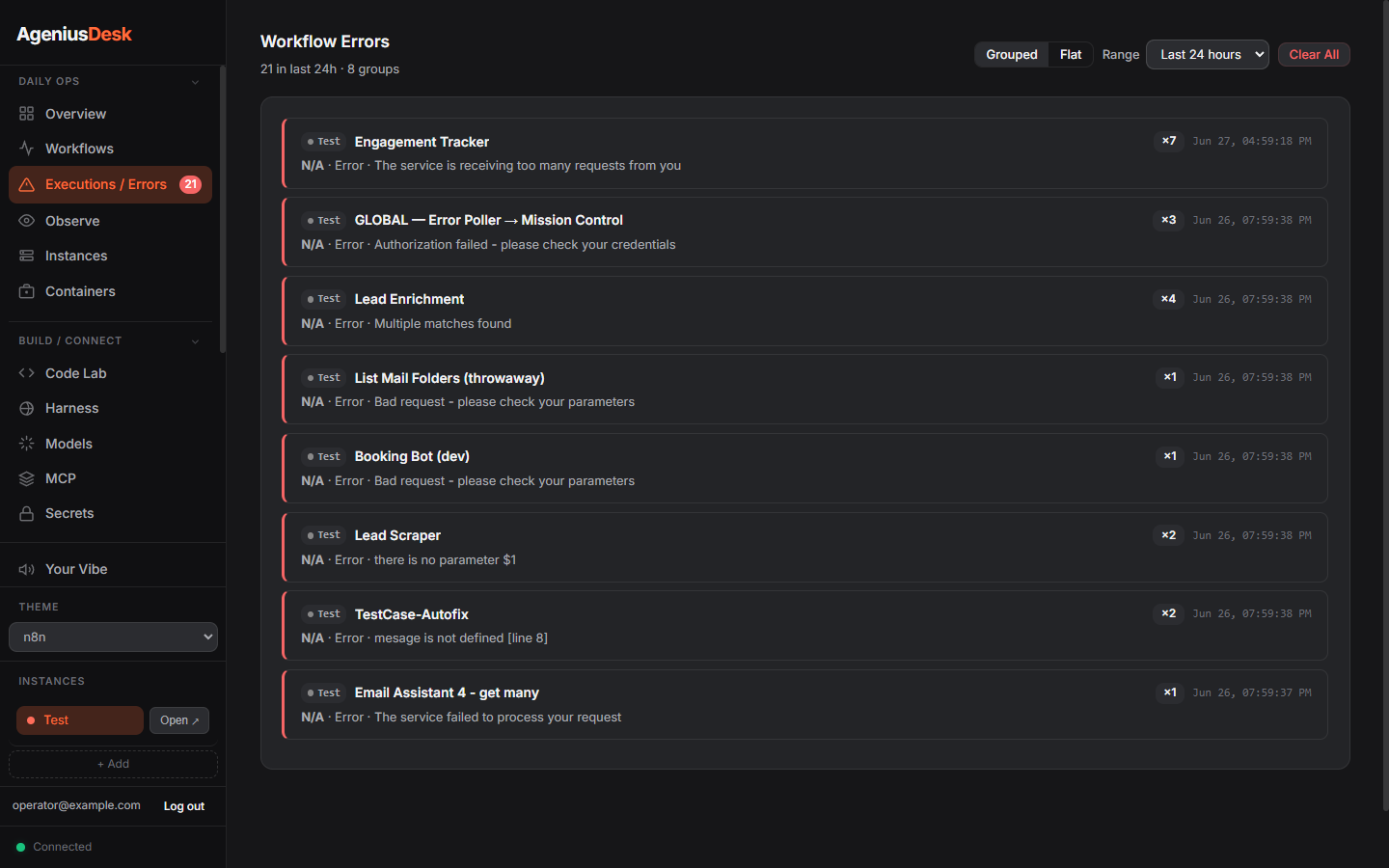
DIAGNOSE
Failures, grouped and explained.
Every error from every instance in one feed, grouped by workflow. One click asks AI for the root cause and a suggested fix.
The ultimate n8n command center.
Deploy, monitor, and fix every n8n instance from one dashboard. AI root-cause diagnosis, a Code Lab, and an encrypted secrets vault.
MIT licensed · Self-hosted · No telemetry
Every error from every instance in one feed, grouped by workflow. One click asks AI for the root cause and a suggested fix.
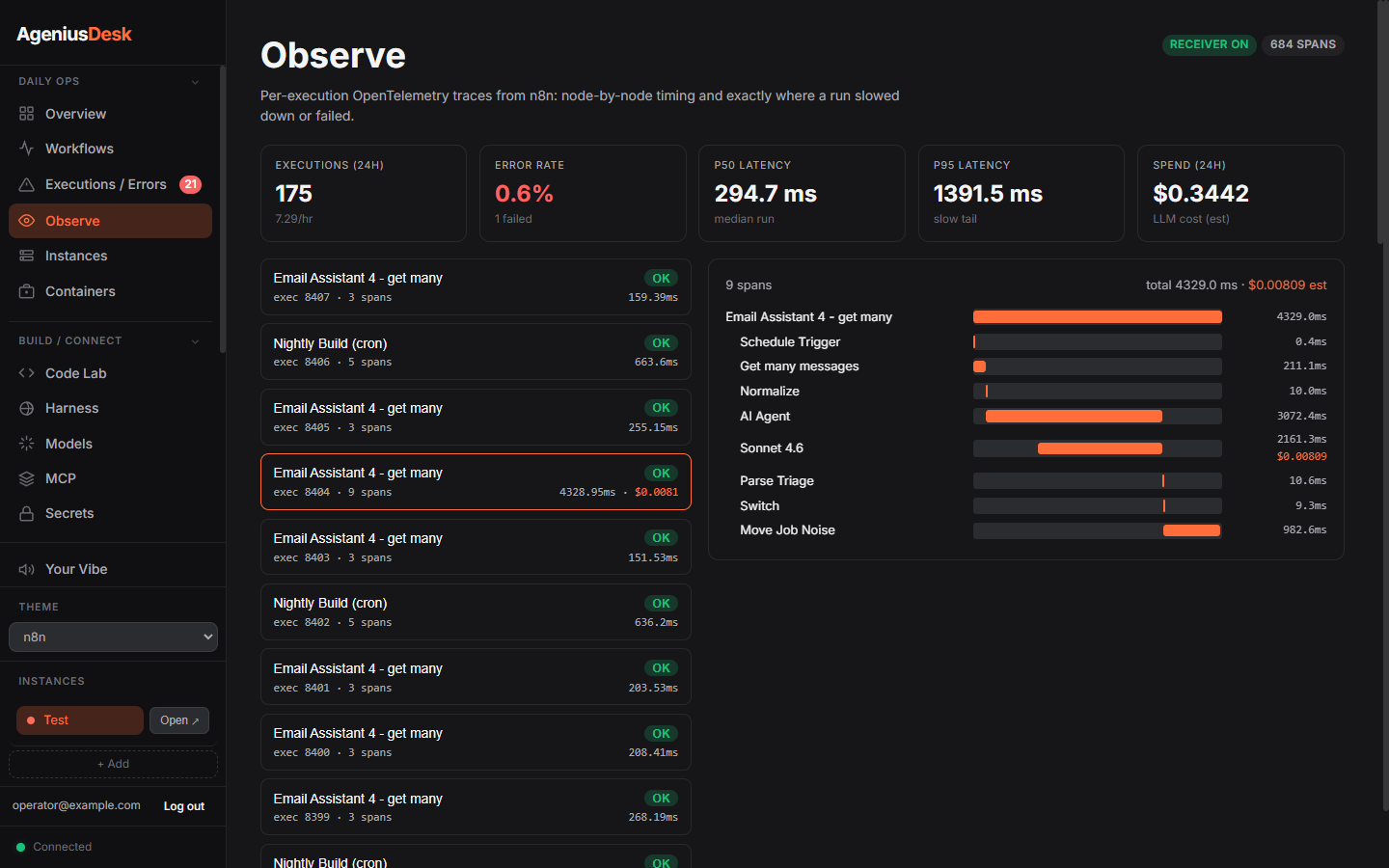
Per-execution OpenTelemetry traces from n8n. Node-by-node timing pinpoints the bottleneck or the failure, not just that something broke.
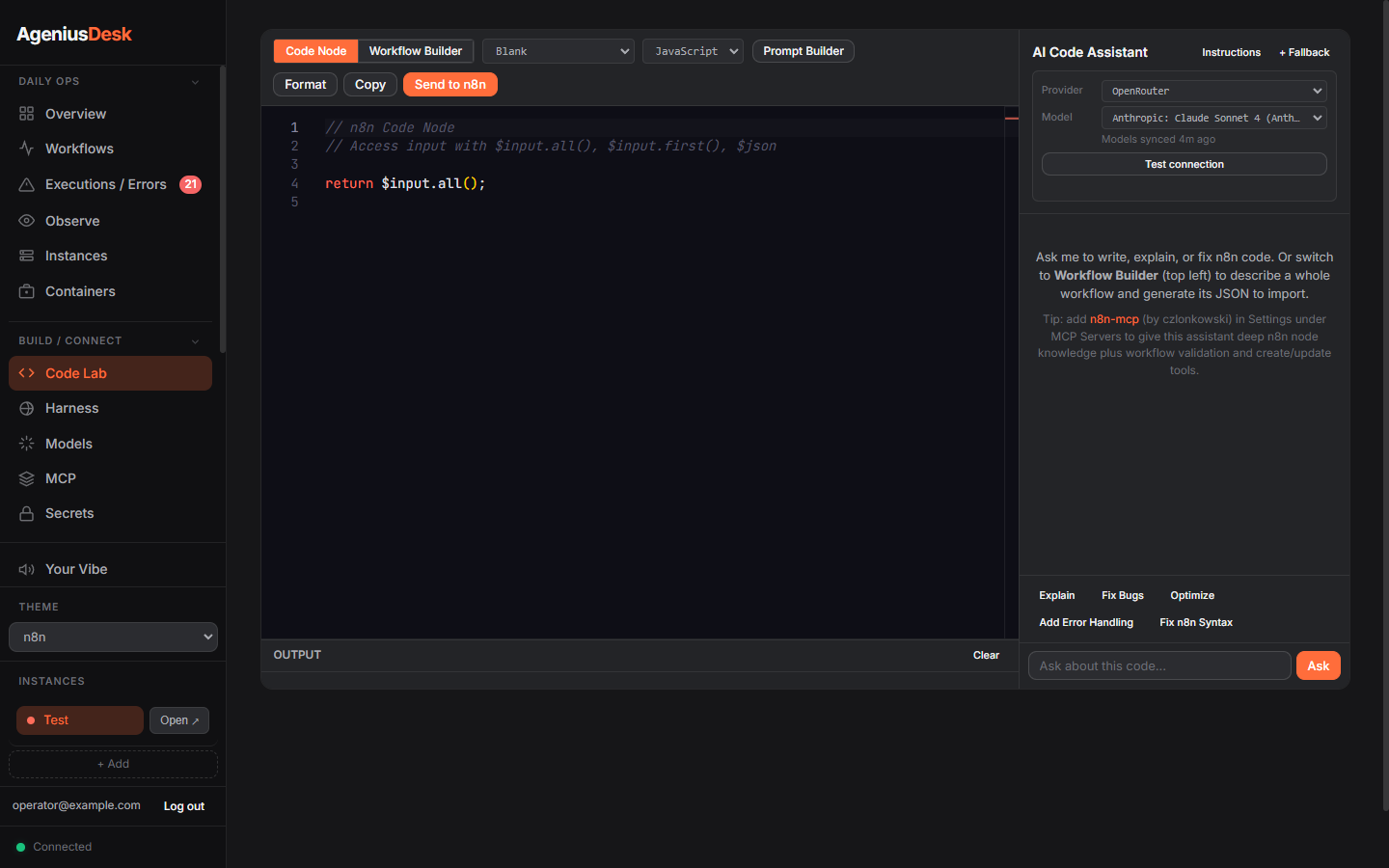
Code Lab is a Monaco editor with an AI assistant. Generate Code-node logic or a whole workflow, then push it straight into your instance.
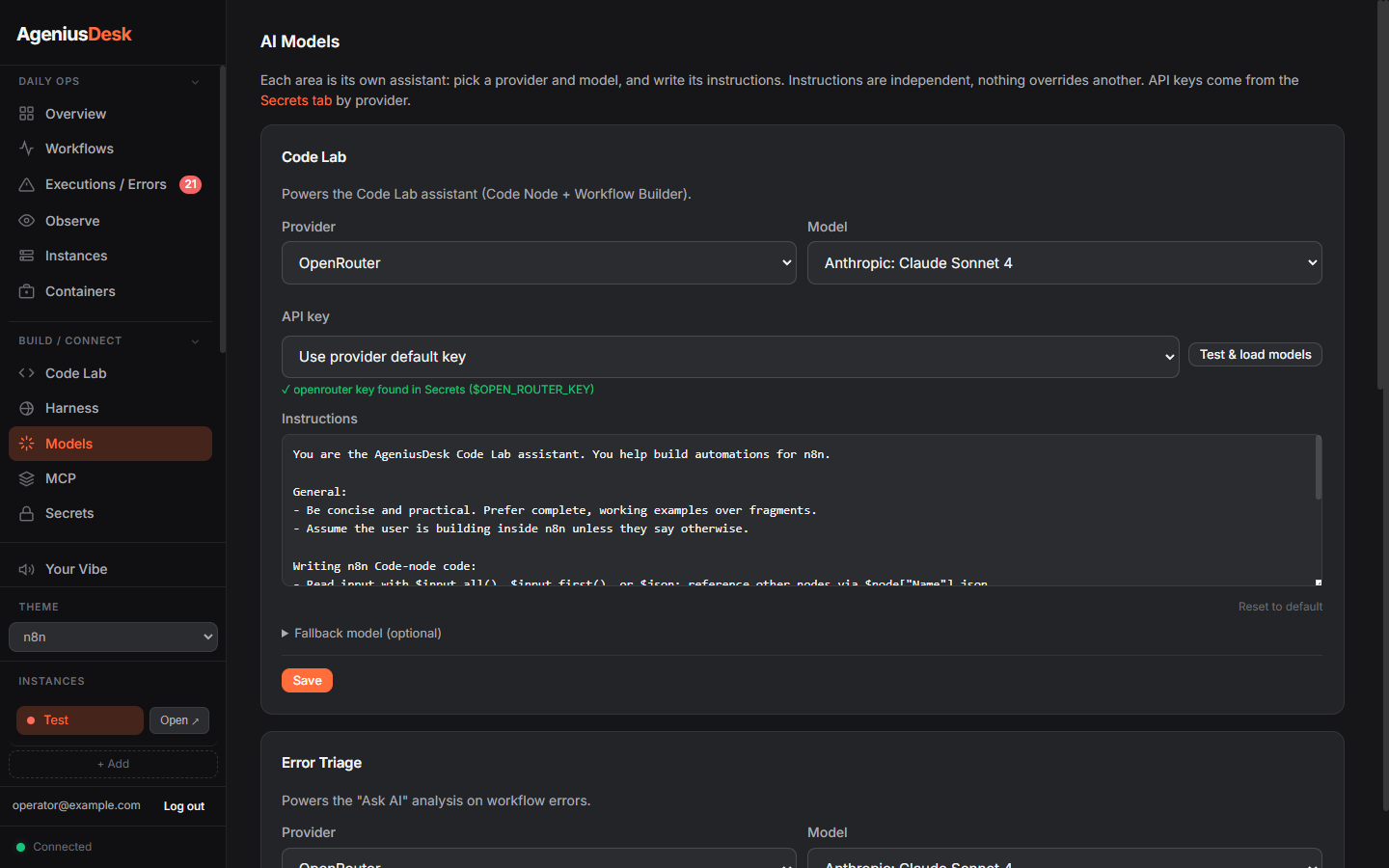
Code Lab, error triage, and chat each get their own provider and model, with fallback. OpenAI, Anthropic, OpenRouter, Perplexity, DeepSeek, Mistral, local Ollama, and more.
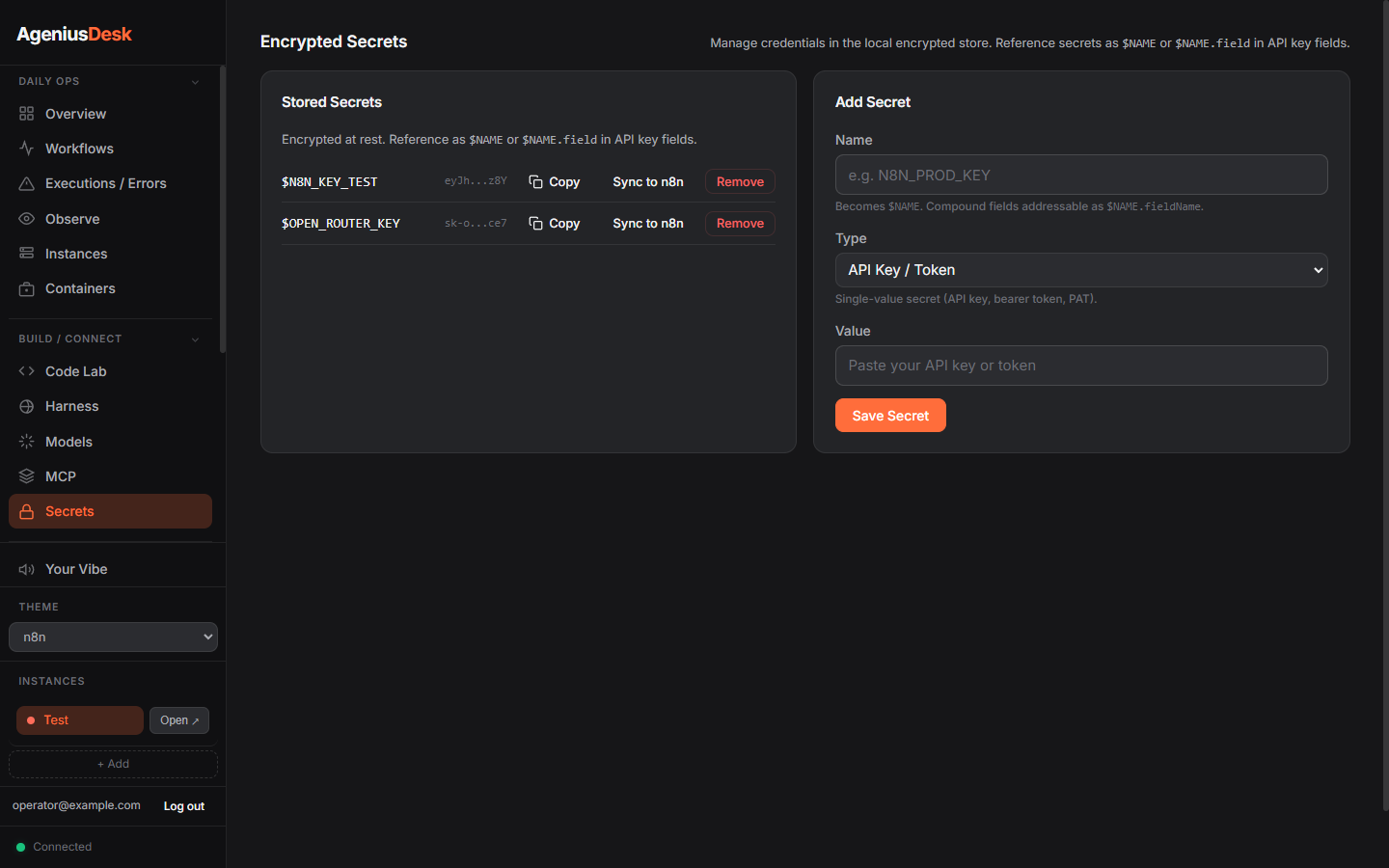
A Fernet-encrypted vault stores your secrets and injects them as credentials into any connected n8n. Keys never touch the browser.
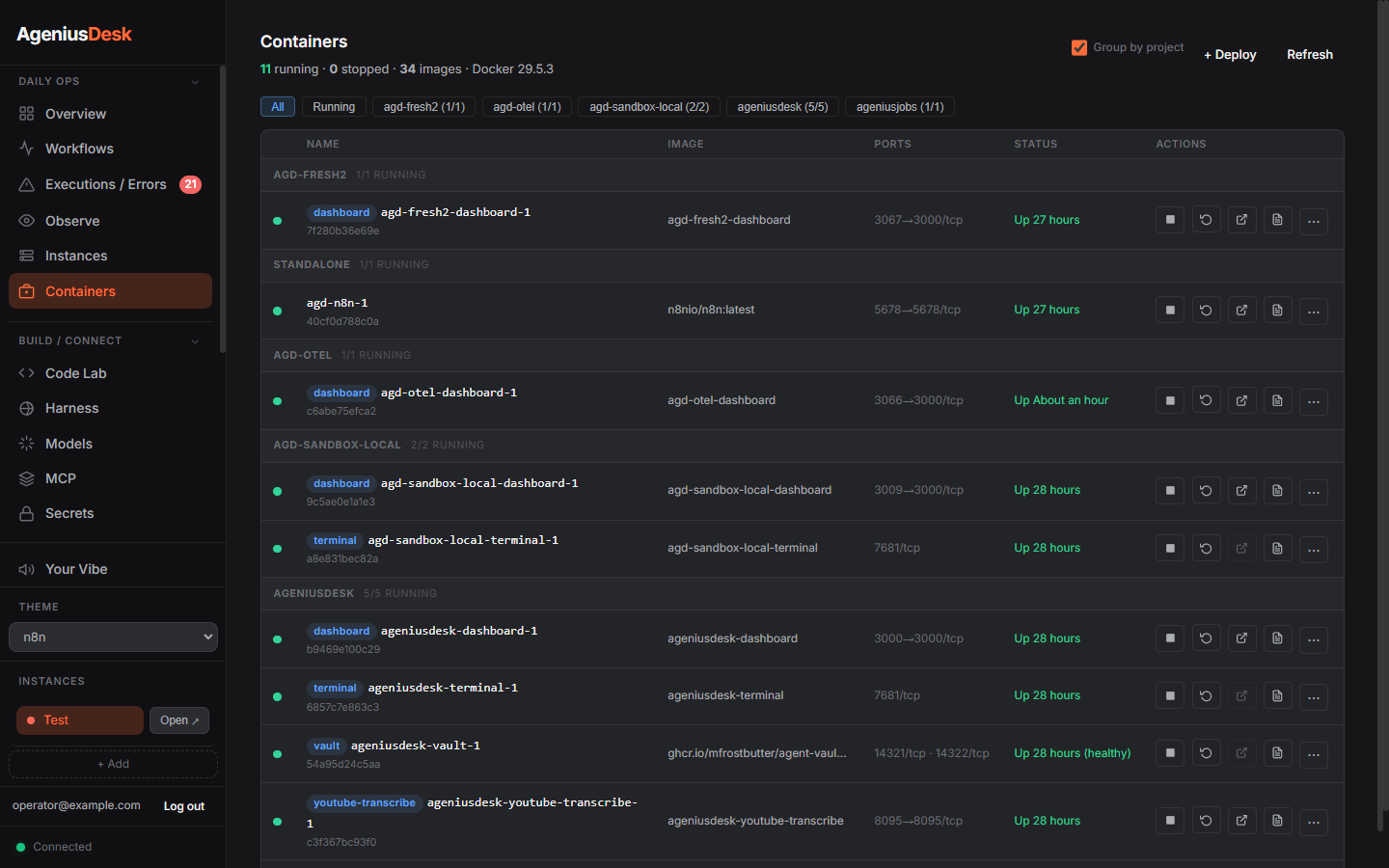
Spin up a fresh self-hosted n8n (plus Postgres, Redis, Qdrant, Ollama) in Docker, and manage every container from one screen.
Workflow health and error rates rolled up across every connected instance, in one pane. A degraded instance is shown, not fatal.
Execution analytics: success rates, error trends, and your busiest workflows over time, per instance and combined.
An Obsidian-compatible notes vault with full-text search, tags, and backlinks. Your agents’ knowledge, versioned as files you own.
n8n-mcp and a curated skill library auto-installed on first boot, so Code Lab and the assistant build workflows right the first time.
LLM spend folded into the trace layer: per-trace and per-call cost, enriched from token usage against a live price book.
Local accounts with optional TOTP 2FA, CSRF protection, and role-based access, so a shared self-hosted desk stays yours.
A managed fleet of LangGraph and PydanticAI agents: a catalog, a live node graph, a normalized run waterfall, human-in-the-loop approve/resume, and LangSmith tracing with per-call token and cost. Built on the LangChain ecosystem, with PydanticAI running alongside through its own adapter. Build your own in Code Lab and register them, no restart.
Off by default — a stock install stays a pure n8n control plane. Opt in with the agent extra:
# opt in to the agent stack (LangGraph + PydanticAI) $ docker build --build-arg AGD_EXTRAS="assistant,langgraph" . # …or from source $ pip install '.[langgraph]' # force it on when the extra is present $ AGD_AGENTS_ENABLED=true Install third-party modules straight from GitHub. AgeniusDesk pins the commit, scans the code, and shows exactly what it can touch before you consent, then runs it isolated if you want.
Point AgeniusDesk at a GitHub repo. It pins the exact commit and runs a static scan, diffing declared capabilities (network hosts, filesystem writes, subprocess) against what the code actually does.
Proportional, informed consent. Critical findings make you type the module id to confirm; every install is written to an audit trail with who, when, and the commit.
Run a module out-of-process: a sandboxed subprocess, or its own hardened Docker container. Privileged actions go through a loopback capability bridge, so provider keys and the host never leak.
Paste a YouTube link, transcribe it from captions, and get a structured breakdown auto-filed into your notes vault under research/.
View on GitHub →Connect a Proxmox VE cluster: live nodes, VMs, and LXCs with gated start/stop/reboot. The cluster token is injected host-side by the bridge, so it never reaches the module.
View on GitHub →One repo, many modules: a manifest, a FastAPI router, and an optional sandboxed view. Ship it, and anyone installs it in two clicks.
View on GitHub →Heuristic scan, not a sandbox by default — install in-process modules only from sources you trust. For a real OS boundary, enable the container tier.
$ git clone https://github.com/Mfrostbutter/ageniusdesk-ce $ cd ageniusdesk-ce $ docker compose up -d Then open localhost:3000, create your account, and connect your first n8n.
Early and shipping fast, star it and help shape the roadmap.
Same desk, fully managed. Be first when AgeniusDesk Cloud opens.
Thanks, you're on the list. We'll be in touch.